
Let’s have a frank conversation about your AI ambitions.
You want to build intelligent, autonomous agents. You want AI that can understand customer intent, solve complex problems, and drive your business forward. But I’ve found that when an AI initiative stalls, it’s almost never a problem with the AI model. It’s a problem with the data.
We love to talk about the “intelligence” of AI, but we forget that every truly intelligent system is built on the same, often unglamorous, ingredient. The hard truth is: your AI’s intelligence is capped by the quality of its inputs.
If you’re trying to build a next-generation agentic workforce, you can’t do it on a last-generation data foundation.
Why Data Quality Determines AI Intelligence
The old “garbage in, garbage out” rule isn’t just a cliche; it’s the fundamental law of artificial intelligence.
An autonomous agent is, at its core, a decision engine. It runs on data. If you feed that engine messy, outdated, or incomplete data, it will make messy, outdated, and incomplete decisions. It’s that simple.
When I analyze an AI Data Infrastructure, I’m not just looking for a “data lake.” I’m looking for three things an agent must have:
- Structured & Clean Data: An agent can’t guess. It needs to know that
cust_ID_902in the CRM is the exact same person asuser_#451in the support system. Ambiguity is the enemy of autonomy. - Contextual Data: Data in a vacuum is just a number. The number “50” is meaningless. Is it 50 dollars? 50 products? 50 days? An agent needs the context. It needs to know this is a “$50 credit” for a “VIP customer” who had a “shipping delay.”
- Real-Time Data Streams: An agent acts in the now. It can’t make an intelligent decision about a customer’s order if it’s looking at an inventory database that’s 24 hours old. It needs access to the live, streaming pulse of your business.
From Data to Knowledge: The Missing Layer in Most Enterprises
For the last decade, what was the “end goal” of a data pipeline? A dashboard.
We pulled data from 20 different sources, piped it into a data warehouse, and slapped a BI tool on top. We called this “being data-driven.”
Let me be direct: Dashboards are where data goes to die. A dashboard is a report of the past. It’s a static mirror. It tells you what happened, but it can’t tell you why, and it certainly can’t take action on it.
This is the great divide. Most companies stop at dashboards. Intelligent enterprises build the missing layer: they turn datainto knowledge.
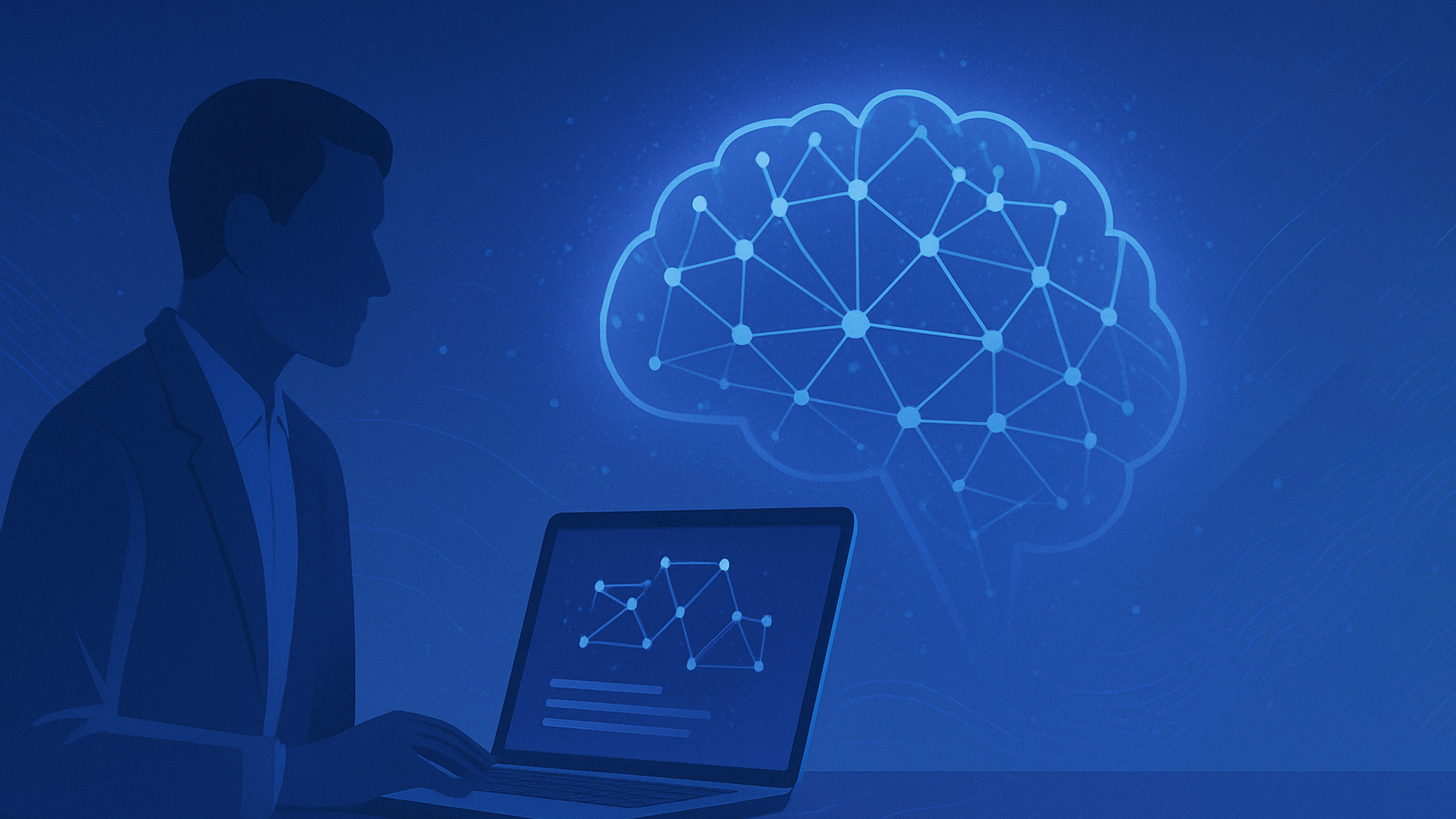
This isn’t just a pipeline; it’s a reasoning system. It’s a framework that doesn’t just store data but understands the relationships between the data. It’s the difference between a long list of facts (a database) and a web of connected concepts (a brain).
Overcoming Data Fragmentation Challenges
So, why doesn’t every company have this “knowledge layer”? Because it’s hard.
Let’s be realistic about your data landscape. Your customer data is in Salesforce. Your support data is in Zendesk. Your product data is in a custom SQL database. Your marketing data is in Marketo. It’s a fragmented mess, and each system speaks a different language.
You can’t build a cohesive, intelligent agent on top of that. The agent would be just as confused as your teams are.
The first step is data harmonization the unglamorous work of creating a single “language” or data model.
But the real, long-term solution we’re seeing lead the pack is the unified knowledge graph.
Think of this as a living, dynamic map of your entire business. It’s a network that connects “Customer: Jane Doe” to “Support Ticket: #812” to “Product: Pro Plan” to “Recent Invoice: #4561.”
When an agent needs to act, it doesn’t have to query 10 different, siloed databases. It just asks the knowledge graph: “Tell me everything about Jane Doe.” In milliseconds, it gets a 360-degree, real-time view of her entire relationship with you. That’s the foundation for an intelligent action.
Future Insight: Adaptive Data Systems
Let’s take this one step further. What’s the future of AI Data Infrastructure?
Right now, humans are in the loop, constantly cleaning and validating these pipelines. The future I see is one of adaptive data systems, where the AI itself becomes the guardian of its own foundation.
This is where agentic AI monitors the data pipelines. An agent detects an anomaly—a sudden spike in misspellings, a broken API connection, a data-type mismatch. But it doesn’t just file a ticket. It intervenes.
It reroutes the pipeline, corrects the schema, validates the fix, and logs the change, all before a human engineer even wakes up. The AI doesn’t just use the data foundation; it actively maintains and improves it.
Your Key Takeaway
In the agentic era, your data isn’t “the new oil”— a passive resource you extract and refine.
It is the new nervous system.
It’s the living, real-time network that carries signals (data), senses change (context), and enables intelligent action (agents). You can’t build a world-class athlete on a broken nervous system. And you can’t build a world-class, autonomous AI on a broken data foundation.
For more deep dives and original AI analysis, visit uniproai.com and subscribe to our research briefs.